- Amazon CPG Digest
- Posts
- Amazon CPG Digest - 11.16.24
Amazon CPG Digest - 11.16.24

Irina Balyurko
November 16, 2024
Amazon Haul is here
Just in time for Black Friday Amazon released its’ low cost online store: Amazon Haul.
Somebody witty dubbed it ‘Temuzon’. Because indeed, this is a reaction to threat of Temu and Shein.
I navigated Amazon Haul Beta app today, and here are initial thoughts.
Amazon Haul homepage look and feel is giddy in colors, very similar to Temu.
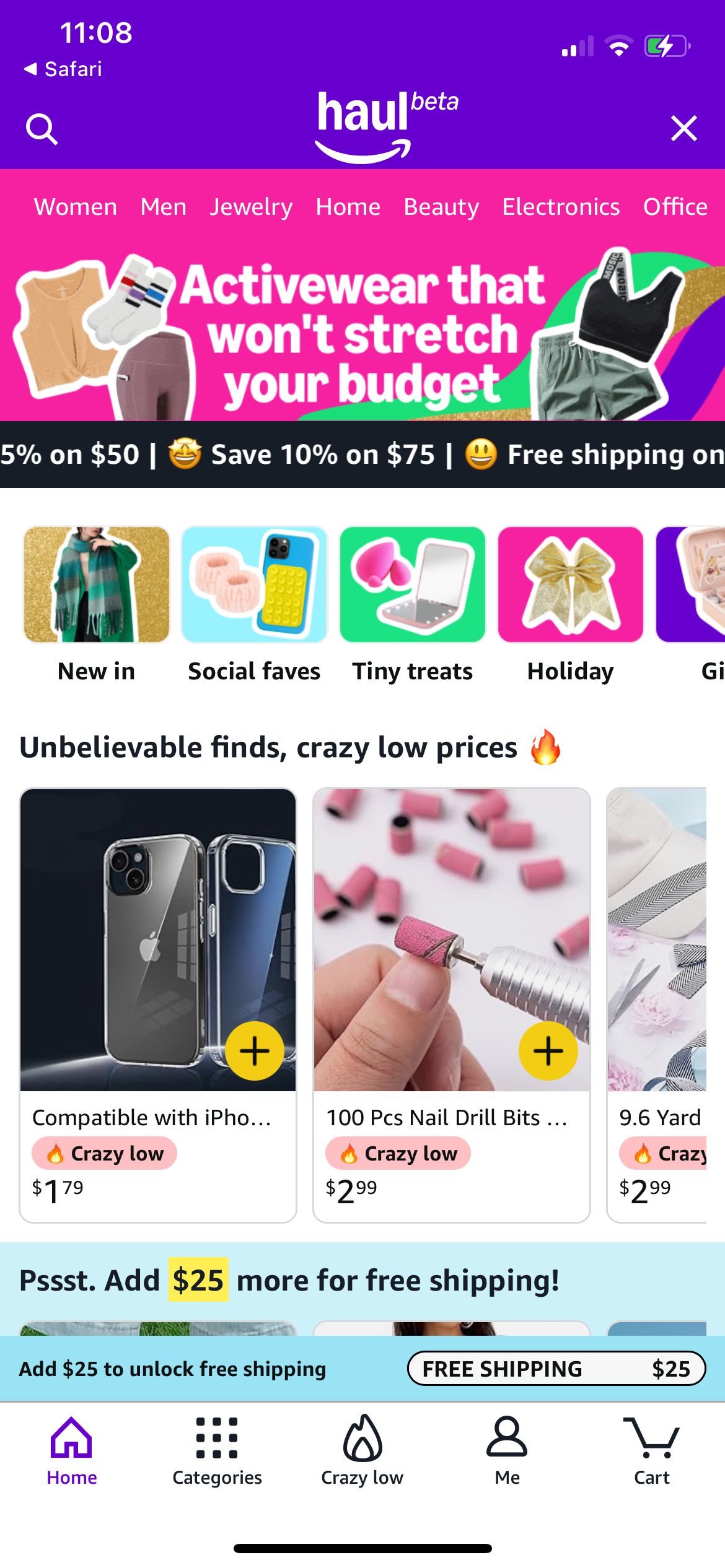
Because Amazon Haul appeals to the same customer avatar as Temu, copycat design and navigation approach is a smart move on Amazon part.
Amazon Haul was hard to locate - no visibility from the main Amazon page, couldn’t find it in the Apple app store. Finally found via putting Amazon haul in the regular Amazon search bar
Anticipate Amazon will keep Amazon Haul separate from the main store even after beta version. Since the goal is not to move its own customers, but to take Temu customers
Amazon Haul is a mobile only app
Products start at $1.99, most of them under $10
Delivery time is under two weeks, and orders ship from overseas (Amazon does not say China, they say overseas even thought it’s confirmed Amazon Haul warehouse is China). If order placed on 11/15, delivery timeline is before 11/27
Shipping for orders over $25 is free
Return window is 15 days, and products under $3 are final sale (no returns)
Impact of Amazon Haul on North American brands
A lot of products on Amazon Haul look VERY similar to those found on Amazon.com. Except price difference of 2-3+ times. Chinese manufactures going direct to consumers cuts out middle men, and well, their customers. Which is a lot of North American brands who have product manufacturing in China.
There will always be customers wanting their order to be delivered same or next day. But rarely orders are that urgent, so some discerning and cost conscious customers will switch from Amazon main store to Amazon Haul. It’s not going to be a 100% switch, most likely large shopper base of Amazon will use both Amazon Prime and the main store, and Amazon Haul, depending on their needs.
US presidential elections impact on business and ecommerce
President-elect Donald Trump's proposed economic policies are poised to significantly impact the US manufacturers, businesses, and consumers.
None of that in a polar, black or white, doom or great scenario that either side projects.
Here are some assurances, and some concerns:
Regulatory environment - positive for businesses. The incoming administration will most likely do tax cut for businesses, loosen AI regulation talk (which should stimulate more innovation), and lessen regulatory burdens on businesses that means less costs.
Sense of uncertainty - higher, which brings risk. Unorthodox for traditional politics background of the incoming President-elect and his decision making creates a lot less predictability of what the next 4 years will be like. This could bring more fluctuations in global trade, currency exchanges. All of that impacts supply chain and costs.
Higher inflation likely. Proposed tariffs and proposed tax cuts, and combination of them is bound to lead to more inflation. Not great for us as consumers. It would be wise for brands to plan on increasing prices in 2025
Tariffs - political sentiment without realistic economic implementation. Harvard economist Richard Wolff explains really well in easily understood language why tariffs do not work. Proposed universal 60% tariffs on China and 10-20% on everything imported outside of the US will lead to supply chain adjustments that lead to higher production costs. Thus less margins for the US brands.
Between Amazon Haul and proposed US President-elect proposed changes US brands that built their business on China manufacturer with commoditized products have some soul searching to do. Strengthening cash flow and financial health of the business, diversifying supply chain to Vietnam, Mexico, or other countries away from China, focusing on non-price levers (brand story, community, storytelling), diversifying multi-channel selling - all of that is on the table with my conversations with brands that feel most impacted by this.
Amazon is testing shipping Whole Foods orders from Amazon Fresh centers, as well as a concept ‘Amazon Grocery’ where Whole Foods customers can order products the store normally wouldn’t carry.
My only question is: what took you so long? Trying to break into grocery business has been a big challenge for Amazon already. We lost track of Amazon experiments and maneuvers trying to make inroads in retail. But leveraging its own powerful logistics and fulfillment, and simplifying and enhancing customer experience by offering more products, in one place is a step in the right direction.
Is Amazon a priority for your 2025 growth?
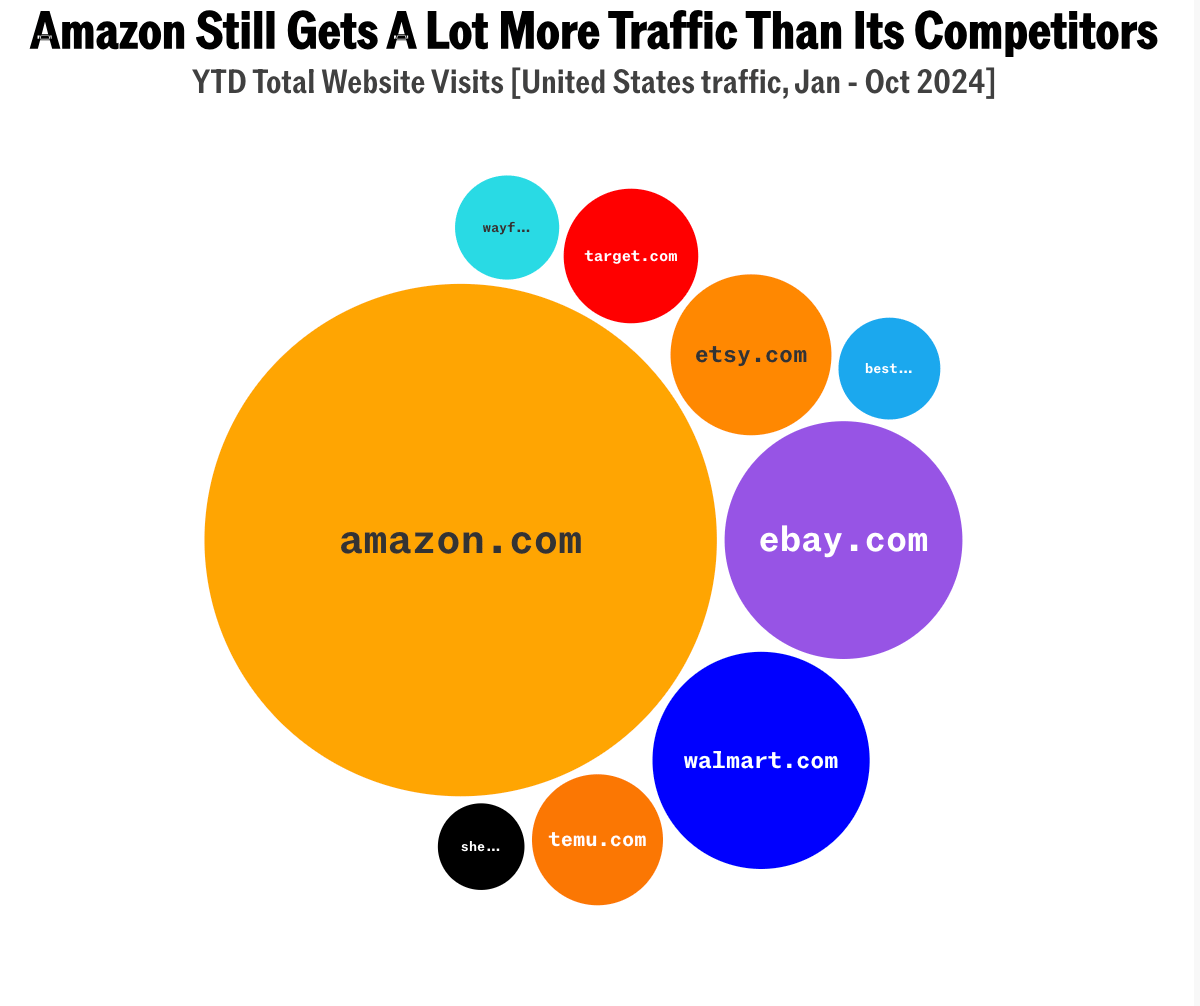
You surely are thinking through what channels you focus on next year. Perhaps this zoom out picture of total e-commerce landscape (credit Chartr and Similarweb) can help you determine on where Amazon should fit in your 2025 business plans and budgets.
Saludos,
Irina